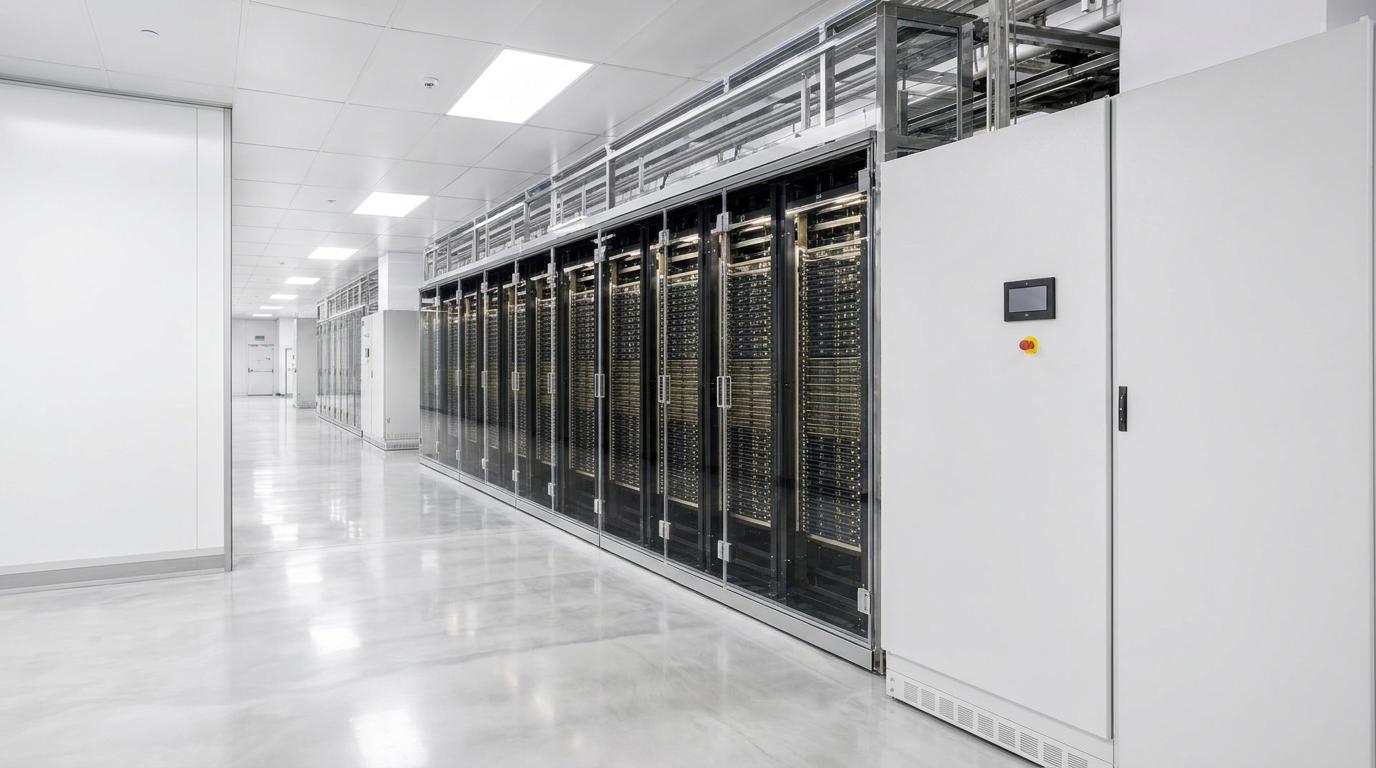
Data Center Cleanrooms
A Breath of Fresh Air for Your Digital Infrastructure
What Are Data Center Cleanrooms?
Data Halls That Enable Maximum Hardware Lifespan and Performance with 360° Critical Air Management
Data Center Cleanrooms are data halls that feature 360-degree critical air management ensuring every environment meets with ISO, ASHRAE, ISA and manufacturer warranty specifications. This means data hall perimeter, gray space and white space are protected and monitored for ideal air quality and airflow, providing real-time and archive proof of compliance.
What’s Included? 360° Critical Air Management
K&N Engineering’s data center filters are washable, reusable air filters built for the CRAC/CRAH units and air handlers that keep data halls clean and cool. They were developed with Apple starting in 2019 and launched in 2023, come in MERV 8, 11, 13, and 14 ratings, and are designed to last 15 years or more. Instead of replacing them every few months, crews wash and reinstall them.
They meet the same particulate filtration standards as conventional disposable filters while removing a recurring waste stream; North American data centers send an estimated 60,000 tons of used filters to landfills each year. Their low-restriction design lets fans run slower, which K&N says reduces energy use, and fewer replacements mean lower labor, shipping, and disposal costs. That makes them a strong fit for operators looking to protect equipment while meeting sustainability goals.
ThinkLite Air’s purifiers use a three-stage process: HEPA filtration, activated carbon, and UVC light. The flagship Icon Air Healer is a freestanding unit on wheels that ThinkLite rates for up to 5,000 sq ft and describes as delivering MERV-19-grade air. It can be placed where it’s needed, such as server rooms, network closets, staging areas, or other spots with poor circulation, and its two filters need replacing only about every two years.
Paired with ThinkLite’s Flair indoor air quality sensors, which integrate with building management systems like Siemens Desigo CC, these purifiers let operators monitor particulates and volatile compounds in real time and respond before contamination affects equipment. They add a localized layer of protection on top of a facility’s HVAC filtration, helping keep the dust and airborne contaminants that cause overheating and corrosion away from critical hardware.
ThinkLite Air’s Flair 2.0 monitor tracks particulate matter (particle counts from 0.1 to 10 microns), temperature, humidity, air pressure, volatile organic compounds, ozone, and CO2. Those are the conditions that determine how well data center hardware holds up. Each unit covers about 5,000 sq ft. An in-duct version measures the outside air coming in through supply ducts, which is especially useful for facilities that use free-air cooling. The sensor cartridges are modular and can be swapped on site to detect other airborne chemicals and gases, and the monitor is RESET Air accredited for measurement accuracy.
All readings feed a real-time dashboard with customizable alerts and multi-site views, so operators can catch rising dust levels, humidity swings, or corrosive gases before they cause overheating, corrosion, or hardware failure. The open API connects to building management systems over BACnet, Modbus, and MQTT, so air quality data can trigger HVAC responses automatically. The Flair can also link wirelessly to ThinkLite’s purifiers, giving data center operators a continuous record of environmental conditions that helps protect uptime and supports equipment warranty compliance.
EkkoSense combines wireless IoT sensors, machine learning, and physics-based digital twin technology to show in real time how cooling, power, and capacity are performing across air- and liquid-cooled data centers. Its EkkoSoft Critical platform displays live thermal and airflow data on a 3D model of the facility and can estimate measurements that are hard to take directly, such as airflow through individual floor vents. EkkoSIM handles modeling and scenario simulation, so teams can test changes to the data hall and the supporting mechanical and electrical infrastructure before making them.
The service side turns that visibility into action. EkkoSense’s thermal optimization programs instrument rack doors and cooling units, then regularly adjust airflow, including floor grille placement and cooling setpoints, to keep conditions where they should be. Its AI-driven Cooling Advisor recommends changes and reports cooling energy savings of up to 30%. For operators, this reduces thermal risk to equipment, cuts cooling costs, and provides measurable carbon reductions for sustainability reporting. Customers include Telefónica, Virgin Media O2, Telehouse, and Africa Data Centres.
EkkoSense’s monitoring places low-cost wireless EkkoSensors on rack doors and EkkoAir sensors on CRAC and air handling units, so operators can see temperature, humidity, and cooling load down to each rack and cooling unit. A single EkkoHub receiver collects encrypted data from up to 500 sensors and sends it to the EkkoSoft Critical 3D platform. That turns a data hall’s airflow and thermal behavior into a live, color-mapped view, so teams can spot hotspots, bypass air, and cooling faults that a traditional building management system would miss.
Built-in anomaly detection then works as an early warning layer. EkkoSoft Critical tracks how far each cooling unit drifts from its control setpoint and alerts on abnormal performance changes, catching developing problems before they hit standard alarm thresholds or cause an outage. The detection is vendor-agnostic and covers hybrid air and liquid environments, including chillers, chilled water systems, and coolant distribution units. Alerts can be sent through Microsoft Teams or JSON webhooks into existing building management systems, helping operators maintain ASHRAE thermal compliance and protect uptime.
Dycem’s contamination control flooring stops dust and particles where most of them enter a data center: on shoes, cart wheels, and equipment moving in from outside. Its naturally tacky, reusable polymer surface captures up to 99.9% of shoe- and wheel-borne contamination and reduces airborne particles by up to 75%. That keeps dust and fibers from building up in racks, cooling systems, and air handlers. Dycem offers loose-laid floating mats for entryways and transition zones, along with inlaid and retrofit 60 cm × 60 cm access tiles that fit into raised-floor systems while leaving cabling accessible.
Because the material is static-dissipative (10⁸ ohms), it also lowers the risk of electrostatic discharge damaging sensitive hardware. Unlike disposable peel-off tacky mats, Dycem is cleaned and reused rather than thrown away daily, which cuts waste without weakening protection. Controlling contamination at floor level helps operators meet the ISO 14644-1 Class 8 cleanliness levels that NVIDIA and other hardware makers specify for installing GPUs and other sensitive computing equipment, and it supports uptime as AI hardware grows more sensitive.
Upsite Technologies’ hot-aisle containment keeps the hot exhaust air from servers separate from the cold supply air that feeds them. That stops the recirculation that causes hotspots and wastes cooling capacity. For full containment, AisleLok Chimneys duct hot-aisle exhaust directly to a ceiling plenum return or vent it vertically. Their frames attach magnetically to cabinets or hang from the building’s ceiling, and they come in flame-rated panels. For a lighter, re-deployable option, AisleLok Modular Containment uses rack-top baffles and bi-directional end-of-aisle doors that can be self-installed in minutes with no custom construction.
Better aisle separation lets operators get more out of the cooling they already have: they can support higher rack densities, raise setpoints, reduce fan and chiller energy, and recover stranded capacity without adding equipment. Because the systems are modular, they can grow or be reconfigured as the data hall changes. They also pair with Upsite’s KoldLok grommets and HotLok blanking panels to seal the remaining bypass airflow paths. Upsite was founded by Ken Brill, who also founded the Uptime Institute, and has focused on data center airflow management since 2001.
Promera supports data halls from construction through go-live. For new builds, its pre-commissioning services team works alongside general and trade contractors to keep the space clean from the start of construction through final handover, so dust and debris from the build don’t end up in cooling systems, underfloor plenums, or newly installed hardware. Its Installation & Product Solutions group handles turnkey design and installation for white-space fit-out, including hot- and cold-aisle containment and airflow management, in both new construction and retrofits, restacks, and upgrades of existing halls.
Using one partner from construction through steady-state operations means the cleanliness and airflow standards set during the build carry into day-to-day operations, where Promera’s preventive maintenance programs take over to protect uptime and equipment. Promera serves hyperscale, colocation, and enterprise operators from 13 branch offices and has expanded into Singapore, the UK, and Ireland, so multi-site operators get the same technical standards in every region.
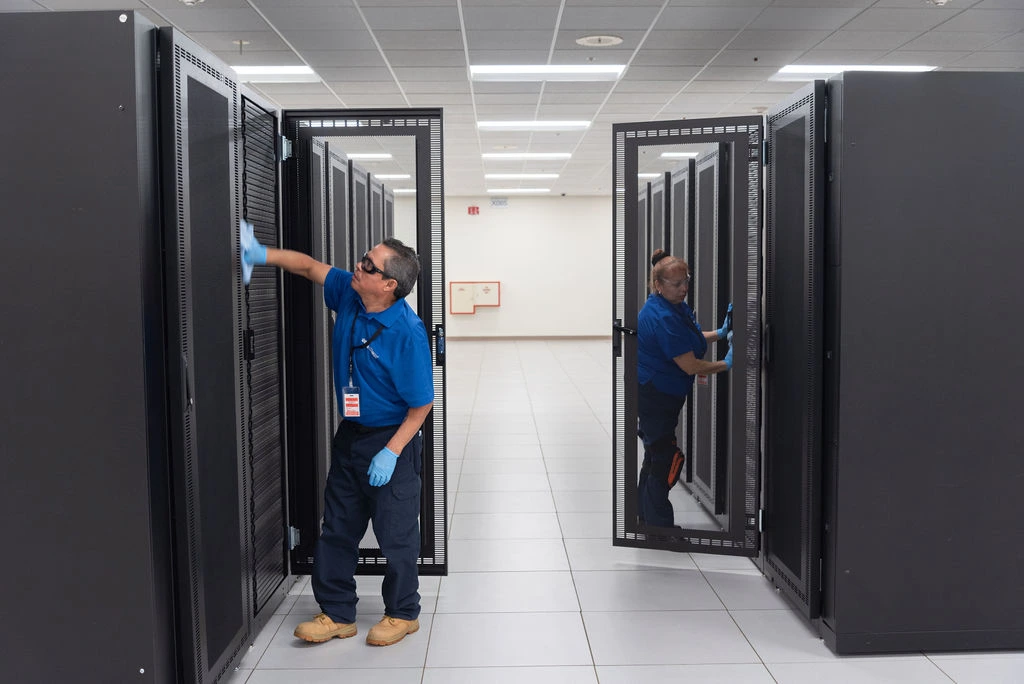
Once a data hall is live, Promera’s Ongoing Maintenance Services keep it clean with scheduled preventive maintenance programs built around each facility’s operations. Promera has more than 45 years of contamination control experience, and its trained technicians work inside live, high-risk environments without disrupting operations. Their work removes the dust, fibers, and debris that build up over time on floors, equipment surfaces, and the underfloor and overhead plenums that carry cooling air, before those particles get pulled into servers and cooling systems.
Regular data hall cleaning protects uptime and equipment, keeps airflow and cooling efficient, and helps operators maintain the ISO 14644-1 Class 8 cleanliness levels that hardware makers increasingly require. Promera holds ISO 9001 and ISO 14001 certifications, and because the same company can handle a site from construction cleaning through steady-state operations, cleanliness standards stay consistent across the facility’s life. With branches across North America and operations in the UK, Ireland, and Singapore, multi-site operators can apply one program across their whole portfolio.
Promera’s managed services team adds live monitoring on top of scheduled maintenance. ThinkLite Flair monitors track particulates down to 0.1 microns, along with humidity, temperature, volatile organic compounds, and ozone, while EkkoSense sensors on rack doors and cooling units record temperature and cooling performance rack by rack. EkkoSense’s anomaly detection flags cooling units that are drifting from their setpoints, and Flair’s custom alerts report rising particle counts or humidity swings, so issues come to light before they reach standard alarm thresholds or affect equipment.
When an alert fires, Promera’s technicians already know the facility and can respond directly. That might mean targeted cleaning to remove a contamination source, adjusting containment, floor grilles, or blanking panels to fix airflow problems, or pointing to a cooling unit that needs service. Every response is backed by recorded sensor data, giving operators a documented record of environmental conditions for compliance, warranty, and reporting. Pairing continuous monitoring with a team that can act on it keeps data halls clean, cool, and within spec, which protects uptime.
Each company in this stack takes on a different source of cooling waste, and the effects add up. Upsite’s hot-aisle containment keeps exhaust air from mixing with supply air, so cooling units deliver cold air where servers need it instead of overcooling the whole room. Promera installs that containment and keeps underfloor and overhead plenums clear, so air moves without obstruction. K&N’s low-restriction reusable filters let air handlers move the same volume with less fan energy, and Dycem flooring and Promera’s regular cleaning keep dust from clogging filters, coils, and server heat sinks, so efficiency doesn’t decline between maintenance cycles. The result is a data hall that needs less cooling to keep the same equipment within its operating temperatures.
The monitoring layer turns that efficient setup into ongoing optimization. EkkoSense’s rack-level sensors and Cooling Advisor show how much cooling capacity is actually needed and where, so operators can raise setpoints, slow fans, or turn off unneeded units with confidence. EkkoSense reports cooling energy savings of up to 30% from this approach alone. ThinkLite’s air quality monitoring confirms that cleanliness holds while those adjustments are made, and Promera’s team responds when either system flags a problem. Together, these steps lower cooling energy, recover stranded power and cooling capacity for more IT load, and produce documented, measurable results that support sustainability reporting and higher rack densities.
Together, the monitoring tools give operators a complete, data-backed view of how each data hall is performing. EkkoSense’s EkkoSoft Critical shows rack-level temperature, cooling performance, and power and capacity use in 3D, with built-in ESG reporting that converts cooling energy savings into carbon reductions ready for audit. ThinkLite’s Flair dashboards add continuous records of particulates, humidity, and other air quality measurements, with multi-site views and alerts. Both platforms connect to existing building management systems through open protocols, so environmental, thermal, and cooling data can sit alongside the rest of a facility’s operational data instead of in separate silos.
That data shows the results of the physical improvements. Operators can compare thermal and air quality conditions before and after containment, filtration, or flooring upgrades, track particle levels against ISO 14644-1 Class 8 targets, and match Promera’s cleaning and maintenance work to measured changes in the environment. Trend analysis helps catch gradual problems early, such as a cooling unit drifting from setpoint or contamination building up, while capacity planning shows how much power and cooling headroom has been recovered for new IT load. The result is a documented record that supports maintenance planning, equipment warranty compliance, sustainability reporting, and investment decisions across the whole portfolio.
When a GPU or other high-value hardware fails, manufacturers like NVIDIA may ask whether it was operated within their specified environmental conditions, which include ISO 14644-1 Class 8 air cleanliness and the required temperature and humidity ranges. The combined service can put together a data hall compliance package that answers that question with recorded evidence. It can include time-stamped temperature and cooling data from EkkoSense for the affected rack and its cooling units, ThinkLite Flair particulate and humidity readings for the surrounding space, Promera’s cleaning and maintenance logs, and documentation of the containment, filtration, and contamination control measures in place. Together, these show the conditions the hardware actually experienced in the days, weeks, and months before it failed.
This gives operators a factual record to submit with a warranty claim instead of relying on assurances, and it can help separate a genuine hardware defect from a facility-caused failure. If the data shows that conditions stayed within specification, the claim is supported with documented evidence. If it shows a temperature excursion or contamination event, the operator can find and fix the root cause before it affects other equipment. Either way, keeping this continuous record protects the value of expensive AI hardware investments and strengthens the operator’s position in conversations with hardware manufacturers and insurers.

How Data Center Cleanrooms Work
Create airflow models to optimize your data hall cooling and power design
Zero-downtime installation of cleanroom components
Perimeter protection with pressurized air and reusable, contamination control flooring at entrances
Air scrubbers and reusable air filters protect gray space.
- Portable purifiers for areas with poor air quality
- Real-time data: air quality/airflow monitors in the data hall
Ongoing cleanse, maintenance, warranty claim support
Address Manufacturer Compliance Specs with Confidence
Present real-time and historical data – hard proof – that your data halls meet the detailed specifications by your hardware manufacturers. Should these expensive units fail early, with Data Center Cleanrooms, your warranty claims are air tight.


ISO 14644-1 Class 8
- Class 8 is the data-center target
- ≤3,520,000 ≥0.5 µm particles per m³
- MERV 13+ / ISO 16890 filtration
- Limits insulating dust on components
ASHRAE TC 9.9
- Recommended: 18–27 °C dry-bulb
- ≤60% RH; max dew point 15 °C
- A1–A4 classes widen the envelope
- Defines inlet conditions vendors cite

ANSI/ISA-71.04
Severity G1 (Mild) is warranty target
Copper less than 300 Å/30d; silver less than 200 Å/30d
Measured with Cu/Ag reactivity coupons
Greater than or equal to G2 flags corrosion-driven failures
Pricing Tailored to Your Needs. Easy Onboarding.
We Make a Complex Process Easy.
1 contract. 6 best-in-class brands. 360-degree critical air management.
OPERATIONAL
Data Halls
ASK
for plan pricing
- Air filters & purification
- Airflow/Air quality monitoring
- Contaminant-control flooring
- Ongoing cleanse, maintenance, warranty claim support, reporting
RETROFIT
Data Halls
ASK
for plan pricing
Operational plan plus…
- Pre-launch airflow modeling
Hot-aisle containment solution
CONSTRUCTION
Data Halls
ASK
for plan pricing
Above plans plus…
Campus-wide spec development
Pre-commissioning cleanse
Pre-launch test at commissioning
5.0
Trusted by developers, colo providers and end users

Through advanced airflow visualization, contamination control, and ongoing maintenance programs, operators can quantify the ROI of clean air. The end results are reduced fan energy, longer component lifespans, and fewer unplanned outages. The result is a facility that doesn’t just cool, it breathes.
Bill Kleyman – CEO Apolo.us, Data Center Influencer